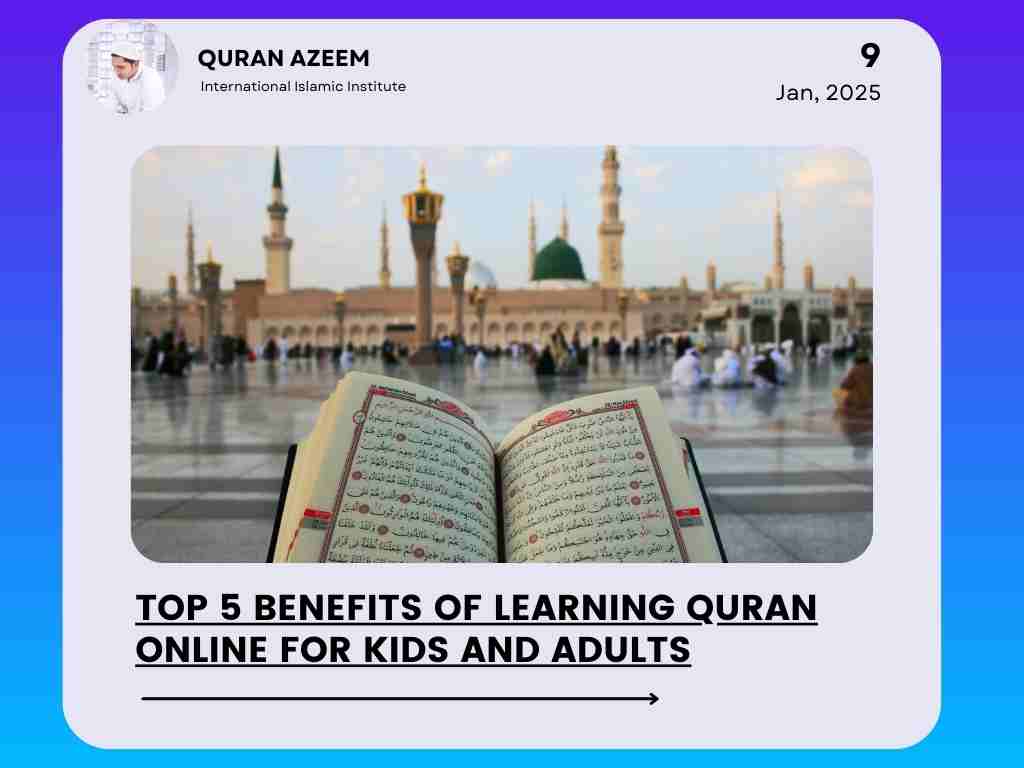
1. The Growing Importance of Online Quran Education
- Global Accessibility: Online Quran learning removes geographical barriers. Students can connect with qualified teachers anywhere in the world, making Islamic education more democratic and accessible. Baytul Quran+2Hidayah Quran+2
- Lifelong Learning: Online platforms cater to all ages — children, busy adults, and even seniors. This encourages continuous spiritual growth, as individuals can resume or deepen their Quranic studies at any stage. Noor ul Quran Institute+1
- Adaptation to Modern Lifestyles: With increasingly busy lives, people need flexible solutions. Online Quran academies fit into varied schedules, helping learners balance their religious and worldly commitments. Quran For You
2. Key Benefits of Online Quran Learning
Here are some of the strongest benefits that are shaping the future of Islamic education through online Quran platforms:
- Flexible Scheduling
Learners can choose class times that suit them — early mornings, late evenings, weekends — without being tied to rigid institutional timetables. Access Quran+2Quran For You+2 - Personalized, One-on-One Learning
Online classes often allow for individual attention, so tutors can tailor lessons based on a student’s pace, strengths, and weak areas. Riwaq Al Quran+1 - Highly Qualified Instructors
Platforms often have a wide pool of vetted, certified tutors who specialize in Tajweed, Hifz, Tafsir, and more. Medium - Engaging & Interactive Tools
Use of multimedia (audio recitation, video, digital whiteboards), quizzes, and progress trackers make lessons more engaging and effective. Hidayah Quran+1 - Recording & Review
Many platforms let students record their sessions so they can revisit and revise what they’ve learned. Riwaq Al Quran - Cost Efficiency
Online classes can be more affordable when you factor out costs like commuting, physical infrastructure, and printed materials. Quran For You - Safety & Comfort
For children and women especially, learning from home offers a secure, comfortable environment that’s supervised by parents. Access Quran - Global Community & Cultural Exchange
Students connect with peers and tutors from different countries, helping to build a shared global Islamic education community. Riwaq Al Quran
3. Emerging & Future Trends in Online Quran Education
To understand the future, it’s important to look at emerging trends that are already shaping how online Quran education is evolving:
- AI and Voice Recognition
Intelligent tools are already being used to correct pronunciation and Tajweed in real time. Hidayah Quran+1 - Virtual Reality (VR) / Augmented Reality (AR)
Though still in early phases, VR/AR could provide immersive Islamic experiences, such as virtual tours of the Kaaba or historical Islamic sites, enhancing spiritual connection through technology. Hidayah Quran+1 - Mobile-First Learning
As smartphone penetration grows, Quran learning apps (mobile-optimized platforms) are becoming more important. Alfalah Quran Institute - Learning Analytics & Personalization
Platforms are increasingly using dashboards and analytics to track student engagement, performance, and progress — allowing for more tailored lesson paths. Alfalah Quran Institute - Gamification
Elements like quizzes, points, badges, and rewards are being used to keep younger learners motivated and engaged. Alfalah Quran Institute - Digital Libraries & Research Tools
The use of digital Quranic libraries, tafsir resources, and AI-enabled tools is boosting serious Quranic research and study. IUB Journals - Career Opportunities for Tutors
There is growing demand for Quran tutors globally — and more female tutors are entering the field. Online platforms provide flexible, remote work opportunities. Alfalah Quran Institute - Education 5.0 Paradigm
The broader educational shift (Education 5.0) emphasizes learner-centric, technology-enhanced education — and online Quran learning fits right into this future. arXiv
4. Challenges & Things to Watch Out For
Even with all the promise, there are potential challenges:
- Internet & Device Dependence
Online learning obviously requires reliable internet and access to devices, which can be a barrier in certain regions. Medium - Distraction Risk
Learning from home means potential distractions (games, TV, siblings). Focus can suffer without discipline. Access Quran - Quality Assurance
Not all platforms or tutors are equally qualified. It’s important to verify credentials, reviews, and teaching methodology. - Lack of Physical Community
While online classes can build community, they might not entirely replicate the social and spiritual environment of a madrassa or mosque gathering. Medium - Over-Reliance on Technology
As digital tools become more common, there’s a risk that students may rely too much on them and not develop deeper, traditional scholarship or spiritual discipline. The Pakistan Journal of Qur’ānic Studies warns against this. IUB Journals
5. Implications for Pakistani Families & Islamic Education
Putting this into the context of Pakistani families or institutions:
- Wider Reach in Rural Areas
Online Quran education can bring highly qualified teachers into remote or underserved areas of Pakistan where local resources are limited. - Preserving Quality While Scaling
Pakistani Quran academies can scale without compromising quality by using digital tools, AI, and structured curriculums. - Empowering Women
Online Quran learning can provide a more accessible, culturally comfortable space for women to learn, teach, and even become tutors. - Sustainable & Cost-Effective Education
For families, online academies can dramatically reduce the cost burden of Quran education, making high-quality learning accessible to more households. - Creating a Digital Islamic Learning Ecosystem
Pakistani Islamic education institutions (madressas, NGOs, scholarship bodies) can integrate online models to create a blended learning ecosystem — part digital, part in-person — making Quran education future-ready.